How to Stake SOL
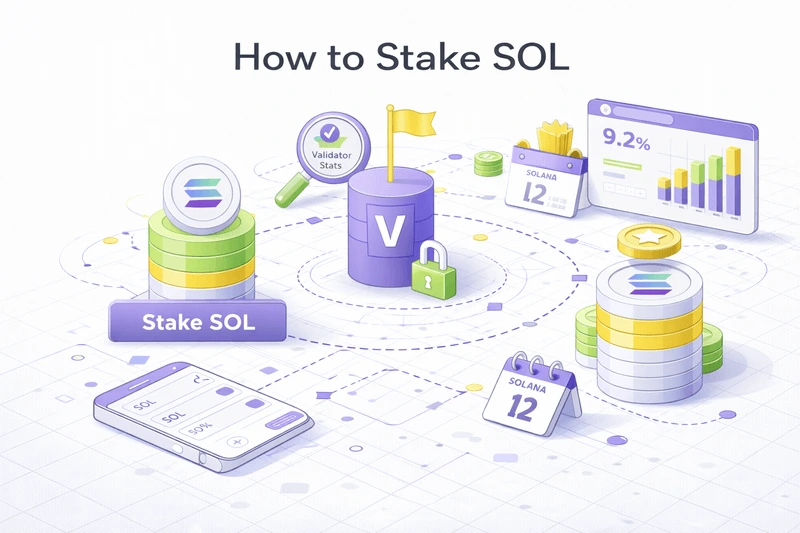
Staking SOL is one of the simplest and most popular ways to earn rewards on the Solana network. The process is straightforward, but understanding how it works and which method to choose can save you time, fees, and confusion.
If you’re new to staking, it’s worth starting with What Is Staking before going deeper.
What You Need Before Staking
Before you stake SOL, you need a Solana-compatible wallet and a small amount of SOL available.
You will use SOL to stake and you will also need a little SOL to pay transaction fees. No special hardware is required. Most users can stake through a wallet and a staking interface in a few minutes.
If you want to understand what happens behind the scenes, read How Staking Works.
Choosing How to Stake SOL
There are two main ways to stake SOL. Each option fits a different type of user, depending on how flexible you want your funds to be.
Option 1: Liquid Staking
Liquid staking is the flexible option that is widely used across Solana.
When you liquid stake SOL, your SOL is delegated to the network and you receive a liquid staking token in return. That token represents your staked SOL plus accumulated rewards, and it can often be used in other on-chain activities while your SOL remains staked.
This is the main advantage. You can earn staking rewards while still using your position in DeFi.
You can explore liquid staking here: 👉 JPool Liquid Staking
For a full explanation of how liquid staking works, see Liquid Staking on Solana.
Option 2: Direct Staking
Direct staking is the more traditional method. You delegate SOL directly to a validator and earn rewards over time. While your stake is active, your SOL is locked in the staking system and cannot be moved until you unstake.
This option is commonly chosen by users who plan to stake long term, do not need liquidity, and prefer a simple setup.
You can explore direct staking here: 👉 JPool Direct Staking
If you want to understand what validators do, see What Is a Solana Validator.
Option 3: Leveraged Staking
Leveraged staking is an advanced option designed for users who want to increase exposure to staking yield by combining staking with DeFi borrowing.
The core idea is simple. You stake SOL and receive a liquid staking token. You then use that token as collateral in a lending protocol to borrow additional SOL (or a SOL-like asset). That borrowed SOL is staked again, which increases the amount of capital earning staking rewards.
This can improve returns, but it also introduces additional risk. Borrowing adds interest costs, and your position can be liquidated if the collateral value drops too far. Because of that, leveraged staking is best treated as an advanced strategy that requires active monitoring and a clear understanding of DeFi lending mechanics.
You can explore direct staking here: 👉 JPool Leveraged Staking
Step-by-Step: Staking SOL
Once you choose a method, the staking flow is similar.
- Connect your wallet.
- Choose how much SOL to stake.
- Confirm the transaction.
- Your stake enters a pending state until it becomes active.
Solana operates in epochs, so staking does not become active instantly. In many cases, your stake becomes active at the start of the next epoch, and rewards begin accruing after activation. This is part of how the network stays stable. If you want the broader context, see How Solana Works.
Earning Staking Rewards
Once your stake is active, rewards are generated automatically. Rewards depend on the amount of SOL staked, validator performance, and overall network conditions.
With liquid staking, rewards are typically reflected in the value of the liquid staking token. With direct staking, rewards accrue to your delegated stake over time.
For a deeper explanation, see Solana Staking Rewards.
Unstaking Your SOL
Unstaking depends on the method you used.
With liquid staking, many platforms support two paths. You can exit instantly if liquidity is available, usually with a slightly higher fee or a slightly worse rate, or you can choose a standard unstake path that follows the network’s timing.
With direct staking, unstaking follows the network’s cooldown rules. During the cooldown, your SOL is locked and does not earn rewards. This mechanism helps protect the network from sudden exits.
How Long Does Unstaking Take?
Unstaking time varies.
Instant unstaking can be quick when liquidity is available. Standard unstaking typically takes longer because it follows the network’s cooldown period. Because of this, it is a good idea not to stake funds you may need urgently.
Is Staking SOL Safe?
Staking SOL is often considered one of the safer ways to earn yield in crypto, but it still involves risks. These include SOL price volatility, smart contract risk in liquid staking, and validator performance issues.
You can learn more about risks here: Is Staking Safe?.
Final Thoughts
Staking SOL is one of the easiest ways to participate in the Solana ecosystem while earning rewards. Whether you choose liquid staking for flexibility or direct staking for simplicity, the core idea is the same. Your tokens support network security, and you earn rewards for contributing.
FAQ
Do I lose control of my SOL when I stake?
No. In Solana staking, you delegate stake rather than transferring custody. Your SOL remains under your control, and validators cannot move it.
Can I use my staked SOL in DeFi?
With direct staking, your stake is locked in the staking system. With liquid staking, you receive a liquid token that can often be used in DeFi while staking rewards accrue.
Do rewards start immediately after I stake?
Usually no. On Solana, stake generally becomes active at an epoch boundary, and rewards start accruing after activation.
What is the main difference between liquid staking and direct staking?
Liquid staking keeps your position usable through a liquid token. Direct staking is simpler, but your funds remain locked until you unstake.
👉 Next recommended articles: