DeFi Risks
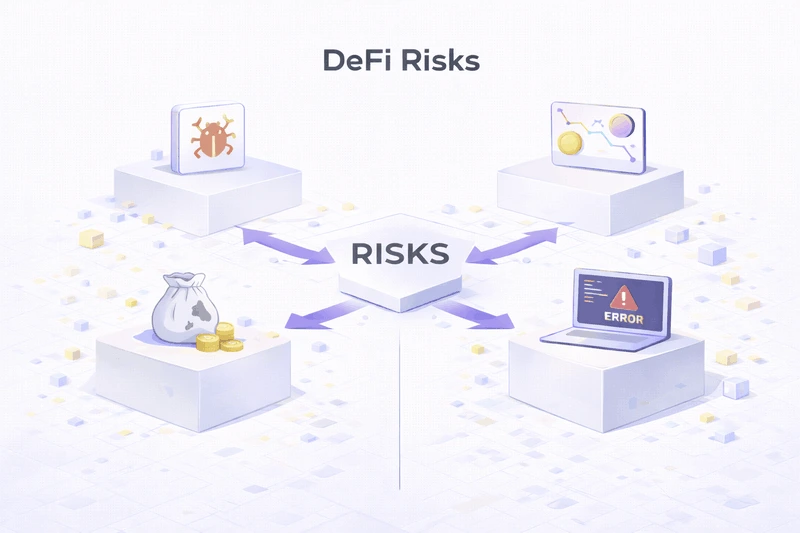
DeFi often looks simple on the surface. You connect a wallet, deposit assets, and start earning yield. Everything feels fast, modern, and efficient. But behind that simplicity is a financial system that works very differently from traditional finance, and that difference comes with real risks.
DeFi is not dangerous by default, but it requires understanding. This article explains the real risks of DeFi in a calm and honest way, without fear-mongering or hype.
The Most Important Thing to Understand
DeFi removes intermediaries. There is no bank, no support desk, and no authority that can reverse transactions. Everything is controlled by code. That’s what makes DeFi powerful, and also what makes it unforgiving.
If you make a mistake, there is usually no way to undo it. This doesn’t make DeFi unsafe. It means users must take responsibility for their actions.
Smart Contract Risk
Every DeFi protocol is powered by smart contracts. A smart contract is just code, and like any code, it can contain bugs. Even audited contracts can have vulnerabilities. Audits reduce risk, but they don’t eliminate it completely.
That’s why long-running protocols are generally safer, battle-tested code matters, and brand-new projects carry higher risk. Time in production is one of the strongest safety indicators in DeFi.
Market Volatility
Crypto markets move fast. In DeFi, price movements directly affect your position. If you are lending, borrowing, or providing liquidity, sudden market changes can lead to losses.
For example:
- collateral value can drop,
- positions can be liquidated,
- rewards can fluctuate.
There are no warnings or manual approvals. Everything happens automatically. This is part of how DeFi stays trustless, but it also means users must understand market dynamics.
Impermanent Loss
Impermanent loss is one of the most misunderstood risks in DeFi. It occurs when you provide liquidity and the price of assets in the pool changes significantly. Even if the pool earns fees, the final value of your assets can be lower than if you had simply held them.
This is not a bug. It’s a mathematical effect of how automated market makers work. Impermanent loss doesn’t mean liquidity provision is bad. It just means it requires awareness.
User Error Is the Biggest Risk
Ironically, the most common cause of losses in DeFi is not hacks. It’s user mistakes.
Sending funds to the wrong address. Interacting with fake websites. Approving malicious contracts. Misunderstanding how a protocol works. Because DeFi is permissionless, there is no safety net. Your wallet gives you both freedom and full responsibility.
Protocol and Governance Risk
DeFi protocols evolve over time. Parameters can change, rewards can be adjusted, and governance decisions can affect users.
Sometimes these changes improve the system. Sometimes they introduce new risks. That’s why it’s important to understand not just what a protocol does today, but how it is governed and how decisions are made.
Why People Still Use DeFi
With all these risks, it’s fair to ask: why do people use DeFi at all?
Because DeFi offers something traditional finance cannot:
- full control over assets,
- global access,
- transparent rules,
- no intermediaries,
- permissionless participation.
Everything is visible, verifiable, and open. The risks exist, but they are not hidden.
How to Use DeFi Responsibly
The safest way to use DeFi is not to chase high returns. It’s to understand what you’re using, start with small amounts, avoid unknown protocols, use well-established platforms, and never invest what you can’t afford to lose.
Education is the most important form of protection in DeFi. If you’re new, it helps to start with:
Final Thoughts
DeFi is powerful, open, and transparent, but it is not forgiving. It removes intermediaries, but in doing so, it gives responsibility back to the user.
If you take the time to understand how it works, DeFi can be one of the most flexible financial tools ever created. If you ignore the risks, it can become expensive very quickly. Knowledge is your best protection.
If you want a Solana-native place to explore different staking strategies alongside DeFi, try JPool.
FAQ
What is smart contract risk?
Smart contract risk is the chance that a protocol’s code contains bugs or vulnerabilities that can be exploited, causing unexpected behavior or loss of funds.
What is impermanent loss?
Impermanent loss can happen when you provide liquidity and token prices move significantly, making your position worth less than simply holding the assets.
What’s the most common way people lose funds in DeFi?
User error. Mistakes like using fake websites, approving malicious contracts, or sending funds to the wrong address are some of the most common causes of loss.
How can I reduce DeFi risk as a beginner?
Start small, use well-established protocols, double-check URLs, understand what you’re signing, and avoid chasing unusually high returns.
👉 Next recommended articles: