How DeFi Lending Works
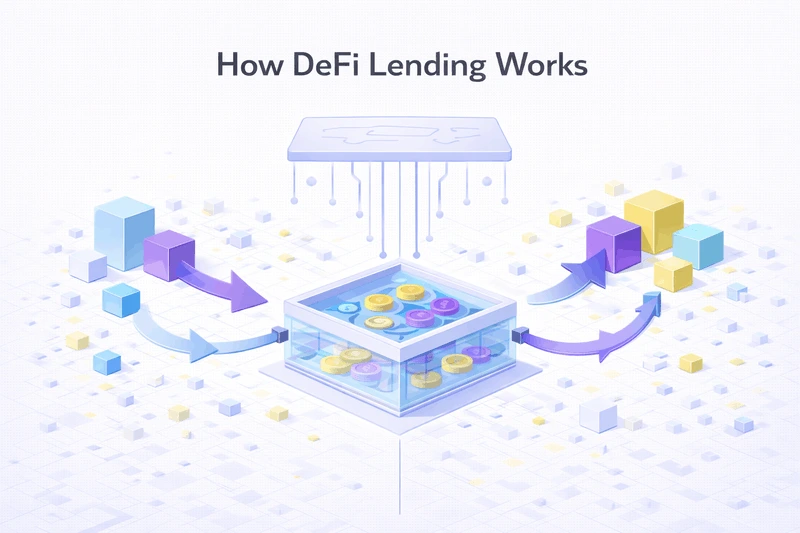
At first glance, DeFi lending sounds almost too simple. You deposit crypto, you earn interest, and you can borrow without banks, paperwork, or approvals. It feels unfamiliar because it works very differently from traditional finance, but once you understand the logic behind it, DeFi lending becomes one of the easiest concepts in decentralized finance.
Why DeFi Lending Exists
In traditional finance, lending is controlled by banks. They decide who can borrow, how much they can borrow, and at what rate. They hold the funds and control the rules.
DeFi was created to remove this dependency. Instead of trusting institutions, users interact with smart contracts, which are programs that follow predefined rules and execute automatically. This removes manual approval, geographic restrictions, and human decision-making, and replaces them with transparent, open systems.
How DeFi Lending Works in Practice
When you lend in DeFi, you are not lending money to another person directly. You deposit your assets into a smart contract, and that contract pools liquidity from many users. Borrowers then take funds from that pool under strict conditions.
Interest is paid automatically and distributed back to lenders. Everything happens on-chain and every transaction is verifiable. There is no negotiation, no paperwork, and no intermediary holding your funds.
How Borrowing Works Without Trust
One of the most surprising parts of DeFi lending is that it doesn’t require trust. Borrowers must deposit collateral before they can borrow anything, and this collateral is usually worth more than the loan itself.
If the value of the collateral drops too far, the system can liquidate it automatically to protect lenders. Because of this mechanism, there are typically no traditional defaults, no credit scoring, and far less reliance on counterparty trust. The system enforces rules automatically.
Where Interest Comes From
Interest in DeFi is not arbitrary. It comes from real demand. When many users want to borrow, interest rates increase. When liquidity is abundant, rates decrease.
Everything is governed by algorithms rather than by people. This creates a dynamic market where interest reflects actual usage instead of centralized decisions.
Why People Use DeFi Lending
People use DeFi lending for different reasons. Some want to earn yield on assets they already hold. Others want access to liquidity without selling long-term positions. Some use it as part of broader DeFi strategies.
What these use cases share is control. You remain the owner of your funds, you can withdraw when liquidity allows, and you don’t rely on banks or approvals.
Risks You Should Understand
DeFi lending is powerful, but it is not risk-free. The main risks include market volatility, liquidation during sharp price moves, and smart contract vulnerabilities.
These risks are not hidden. They are part of the system. That’s why understanding how DeFi works is more important than chasing high yields. If you’re new to this, it’s worth reading: DeFi Risks Explained.
Why DeFi Lending Works Well on Solana
DeFi relies heavily on speed and low transaction costs. On slow blockchains, lending becomes expensive and inefficient. On Solana, transactions are fast and fees are minimal. This makes lending, borrowing, and managing positions smoother, even for smaller amounts.
Some strategies combine staking and borrowing. JPool’s Leveraged Staking strategy is one example. It uses liquid staking and DeFi borrowing to increase exposure to staking yield while keeping the position collateralized. If you want the step-by-step breakdown, see Leveraged Staking.
How DeFi Lending Fits Into the Bigger Picture
DeFi lending is not a standalone feature. It connects directly with liquidity pools, yield farming, staking, and decentralized exchanges. Together, these systems form an open financial ecosystem where users can move value freely without intermediaries.
To understand this ecosystem better, see: What Is DeFi?.
Final Thoughts
DeFi lending works because it replaces trust with transparency. You don’t need banks, permission, or intermediaries. You interact directly with code that follows clear rules.
Once you understand the logic, DeFi lending stops feeling mysterious and starts feeling predictable.
FAQ
Why are DeFi loans usually overcollateralized?
Because protocols need protection against price volatility. Requiring more collateral than the loan helps reduce the chance lenders lose funds during market swings.
What triggers a liquidation?
Liquidations typically happen when collateral value falls below the protocol’s required threshold, so the system sells collateral to repay the loan.
Are DeFi interest rates fixed?
Usually not. Many protocols adjust rates dynamically based on borrowing demand and available liquidity.
👉 Next recommended articles: