Validator vs Delegator
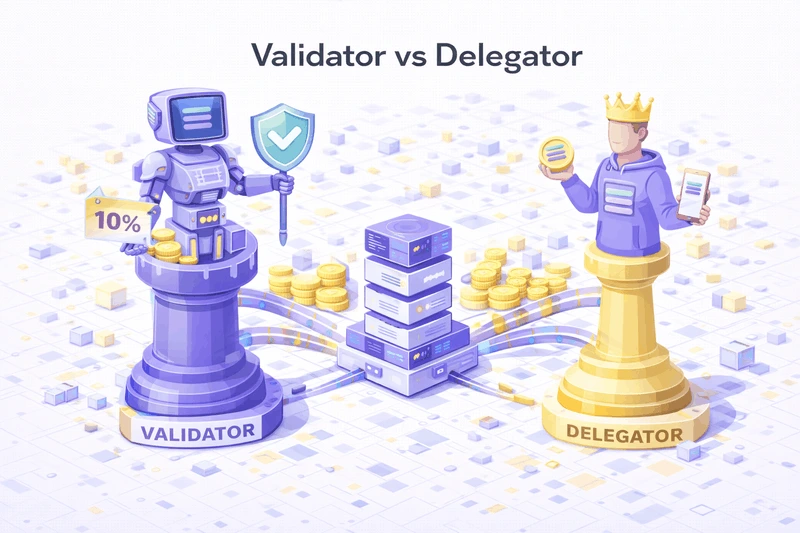
When people start staking SOL, they usually encounter two terms that sound more complicated than they really are: validator and delegator. At first glance, it may seem technical, but the difference is simple. Once you understand it, the whole staking process becomes much clearer.
This article explains how validators and delegators work together, what each role does, and why both are essential for the Solana network.
The Simple Difference
The easiest way to understand it is this. A delegator provides stake. A validator provides infrastructure. Delegators supply SOL. Validators run the network.
Neither role works without the other.
What a Delegator Actually Does
A delegator is a user who stakes SOL to support the network. You don’t run servers, you don’t need technical knowledge, and you don’t give up control of your funds.
When you delegate, your SOL stays under your control. The validator cannot access or move it. You earn rewards automatically, and you can unstake or switch validators according to normal staking rules. This is how most people participate in staking, and it is exactly how the system is designed to work.
If you want to understand the process in more detail, see How Staking Works.
What a Validator Does
A validator operates the Solana network. Validators process transactions, produce blocks, participate in consensus, maintain uptime, and help secure the blockchain.
Running a validator requires dedicated hardware, stable internet, constant monitoring, and technical expertise. Because of this work, validators earn rewards, and those rewards are shared with delegators after commission.
How Validators and Delegators Work Together
Delegators and validators form a cooperative system. Delegators contribute economic weight by staking SOL. Validators use that stake to participate in block production and consensus.
The more stake a validator has, the more responsibility it carries, the more often it participates, and the more rewards it can generate. Those rewards are then shared with delegators after commission. This balance helps Solana scale while remaining decentralized.
Who Takes the Risk?
This is one of the most misunderstood parts of staking.
Delegators keep ownership of their SOL, and their main downside is usually earning less if a validator performs poorly. Validators pay for infrastructure, risk earning fewer rewards if they go offline, and carry the operational responsibility for performance.
In other words, validators carry most of the operational risk, while delegators mainly face performance-related reward variability.
Why Your Validator Choice Still Matters
Even though delegators don’t run infrastructure, their choices affect the network. If too much stake flows to a small number of validators, decentralization decreases, resilience weakens, and systemic risk increases.
Choosing reliable validators while avoiding excessive concentration helps keep Solana healthier over time. You can explore real validator data here:
Can Anyone Become a Validator?
Technically, yes. In practice, running a validator requires continuous maintenance, technical knowledge, financial investment, and long-term commitment.
That’s why most users choose to remain delegators. It is simpler, more accessible, and still participates in staking rewards.
Which Role Is Right for You?
For most users, the answer is straightforward. If you want staking rewards without technical setup while keeping control of your SOL, being a delegator is the better fit.
Becoming a validator makes sense only if you want to operate infrastructure and contribute at a technical level.
Final Thoughts
The validator and delegator model is one of the reasons Solana works well. Validators keep the network running. Delegators secure it economically.
Together, they form a system that is fast, decentralized, and efficient. Once you understand this relationship, staking becomes easier and far less intimidating.
FAQ
Can a validator take my SOL if I delegate to them?
No. Delegation does not give the validator custody of your funds. Your SOL remains under your control, and the validator cannot move it.
Why do delegators earn rewards?
Rewards are paid to validators for participating in consensus and producing blocks, and validators share those rewards with delegators after commission.
Does my validator choice affect decentralization?
Yes. Stake distribution matters. Choosing reliable validators while avoiding over-concentration supports network resilience.
👉 Next recommended articles: