SPL Stake Pool vs. Proprietary Contracts: Mitigating Liquid Staking Risks on Solana
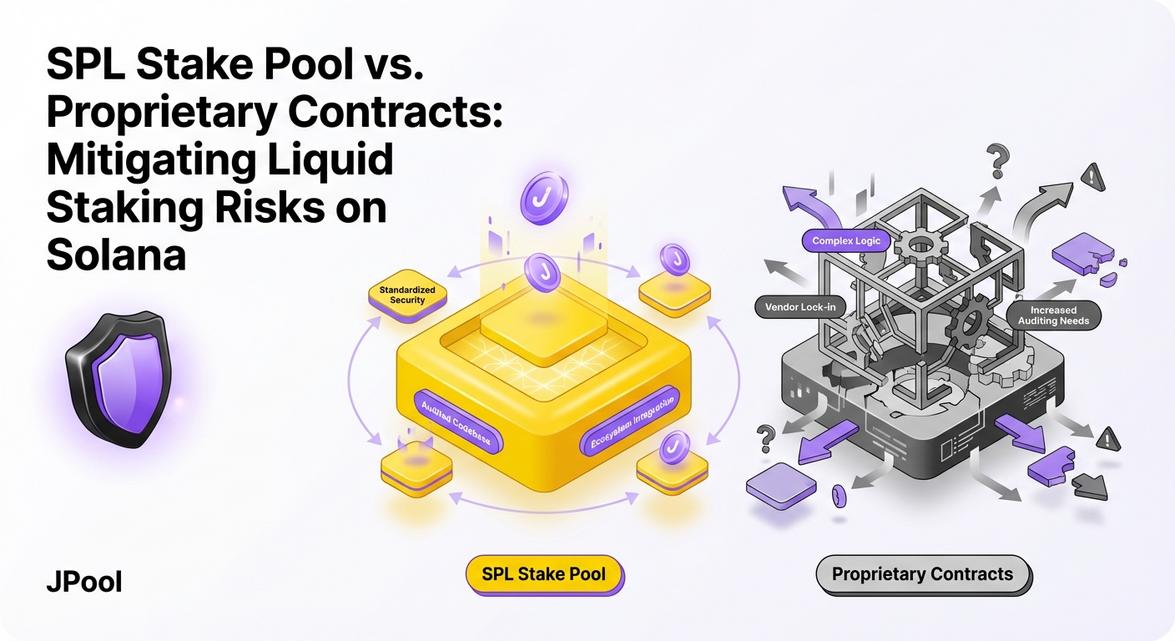
As Solana’s liquid staking ecosystem matures in 2026, institutional evaluators and retail investors alike face a critical architectural choice: platforms built on Solana Labs’ audited SPL Stake Pool Program versus those relying on proprietary smart contracts. This decision fundamentally shapes your risk exposure, capital security, and long-term confidence in liquid staking infrastructure.
Table of Contents
- The SPL Stake Pool Architecture: Battle-Tested Security by Design
- Proprietary Smart Contracts: Elevated Code Risk and Trust Assumptions
- Can You Actually Lose Your Staked SOL? Understanding Real vs. Perceived Risks
- Withdrawal Mechanisms: Testing Platform Liquidity and Architecture Resilience
- Decentralization as a Security Layer: Multi-Validator Risk Distribution
- The Leverage Risk Exception: Third-Party Integration Considerations
- Due Diligence Framework: Questions to Ask Before Staking
- Conclusion: Architecture Determines Risk Ceiling
Understanding the distinction between these two approaches is essential for anyone asking, “Can I lose my staked Solana?” The answer depends heavily on which technical foundation your liquid staking platform employs.
The SPL Stake Pool Architecture: Battle-Tested Security by Design
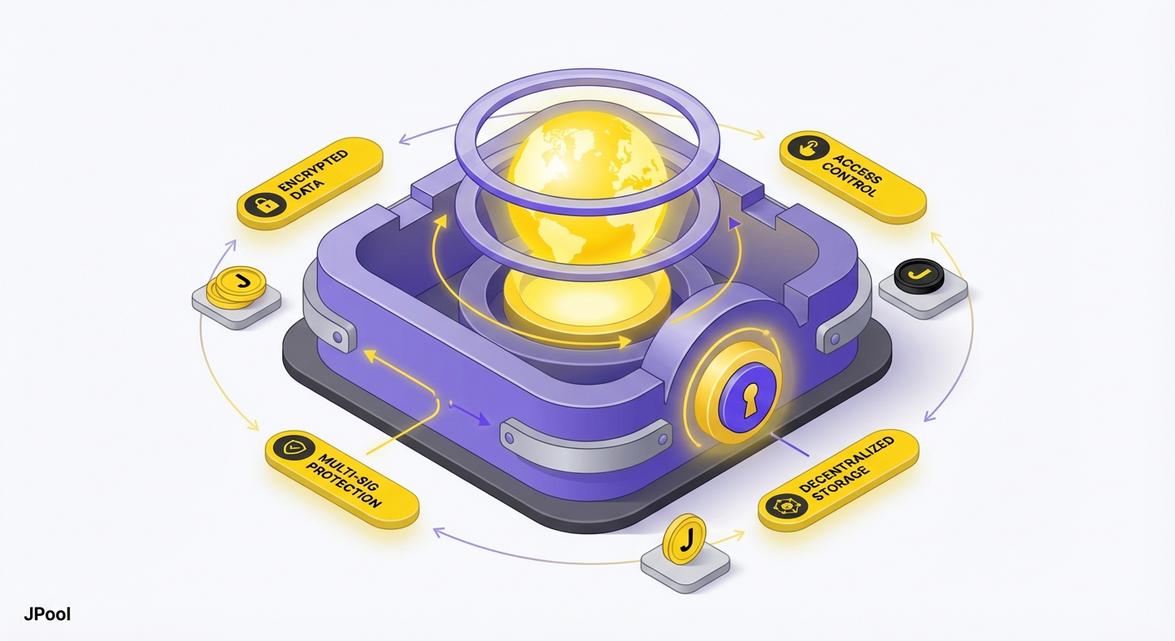
Solana Labs’ SPL Stake Pool Program represents the gold standard for liquid staking infrastructure on Solana. This on-chain program has undergone multiple independent security audits and operates as a non-custodial framework where the platform itself has no direct access to user funds.
JPool operates exclusively on this audited SPL Stake Pool Program. According to the platform’s documentation, “JPool has no access to your SOL whatsoever. Solana Foundation’s Program has undergone several audits and is considered as secure as humanly possible.”
The SPL architecture functions through a transparent mechanism: users deposit SOL in exchange for liquid staking tokens (in JPool’s case, JSOL) that represent proportional ownership in the stake pool. As validators earn rewards, the pool and pool tokens grow proportionally in value through an increasing exchange rate. This design eliminates the need for users to trust the platform operator with custody of their assets.
Proprietary Smart Contracts: Elevated Code Risk and Trust Assumptions
Proprietary liquid staking contracts introduce a fundamentally different risk profile. These custom-built systems require users to trust that the platform’s developers have:
- Implemented secure code without exploitable vulnerabilities
- Conducted thorough independent audits (which may or may not be publicly verifiable)
- Designed fail-safe mechanisms for edge cases and network disruptions
- Maintained ongoing security monitoring as the codebase evolves
Standard risk disclosures in liquid staking acknowledge that smart contract code may contain exploitable vulnerabilities introduced by developers or third parties. When evaluating proprietary systems, consider that successful attacks or even the perception of technological weakness can adversely affect functionality, convertibility, or transferability of your liquid staking tokens.
Can You Actually Lose Your Staked SOL? Understanding Real vs. Perceived Risks
One of the most common concerns among prospective liquid stakers is the fear of principal loss. On Solana, it’s critical to understand that validator underperformance affects yield, not your staked principal.
When using the SPL Stake Pool architecture through platforms like JPool, your SOL remains staked across a diversified set of validators monitored through continuous performance tracking. JPool’s Smart Delegation Strategy removes validators that no longer meet eligibility criteria every epoch and redistributes stake every five epochs to maintain optimal performance and decentralization.
If a validator underperforms, the impact is reflected in reduced APY—not a loss of your original stake. The platform maintains a 1% reserve account specifically to fulfill large withdrawal requests, ensuring liquidity even during periods of high redemption demand.
The real risks to monitor in liquid staking are:
- Smart contract vulnerabilities (mitigated by using audited SPL infrastructure)
- Validator concentration risk (addressed through diversification strategies that minimize excessive stake concentration)
- Transaction irreversibility (inherent to blockchain; always verify wallet addresses)
- Delayed execution during network congestion (temporary, not permanent loss)
Withdrawal Mechanisms: Testing Platform Liquidity and Architecture Resilience
A platform’s withdrawal system reveals critical insights into its architectural soundness. JPool offers two unstaking options that demonstrate the SPL Stake Pool’s flexibility:
- Delayed Unstake: SOL withdrawn after the current epoch completes at a lower fee, based on the current exchange rate when redemption settles
- Instant Unstake: Immediate SOL withdrawal at a higher fee, subject to pool liquidity availability
The ability to offer instant withdrawals depends on the platform maintaining adequate reserves—a feature enabled by the SPL Stake Pool’s reserve account mechanism. This 1% reserve is replenished by proportionally reducing stake across all participating validators when depleted, ensuring systemic stability.
Proprietary systems may lack these built-in liquidity safeguards, potentially exposing users to extended lock-up periods during market stress.
Decentralization as a Security Layer: Multi-Validator Risk Distribution
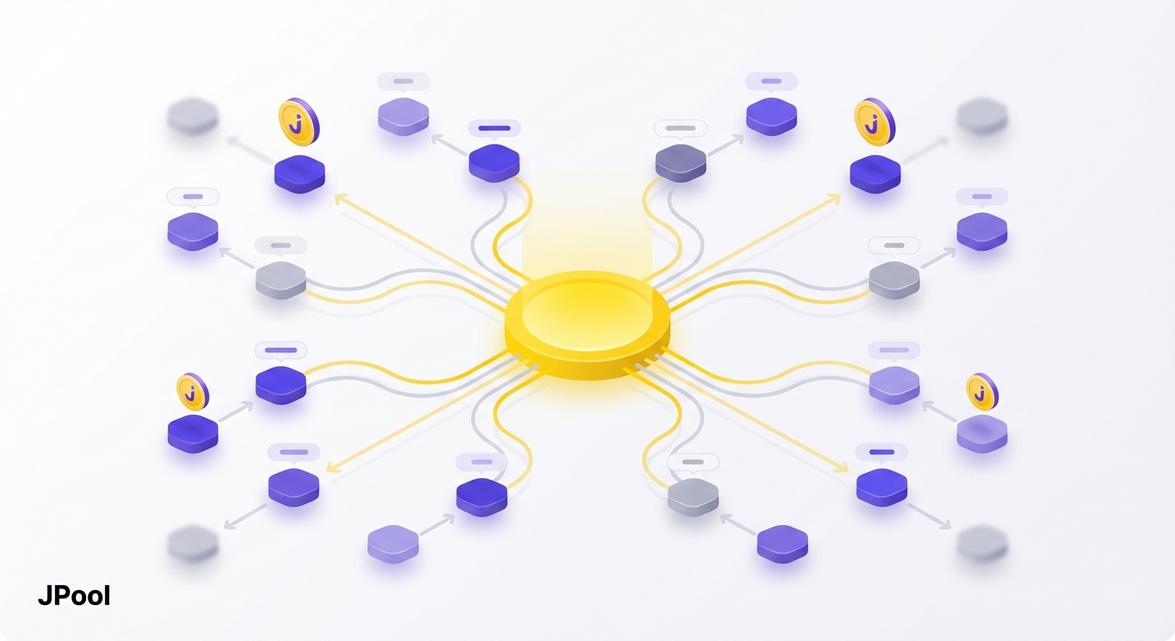
Beyond architectural security, effective liquid staking platforms must distribute stake across a diversified validator set to minimize single points of failure. JPool’s approach continuously monitors validators using performance and reliability metrics, automatically including eligible validators and removing those that fail to meet criteria.
The platform’s delegation strategy evaluates validators based on APY performance across multiple epochs, ensures validators are not blacklisted by the Solana Foundation or Jito Foundation, and caps maximum stake per validator at 750,000 SOL to prevent excessive concentration.
This multi-validator approach means that even if individual validators experience downtime or performance issues, your overall staking position remains protected through diversification—a critical risk mitigation layer regardless of whether you’re using SPL or proprietary infrastructure.
The Leverage Risk Exception: Third-Party Integration Considerations
While SPL Stake Pool architecture provides robust security for standard liquid staking, users should understand that additional risks emerge when integrating with third-party DeFi protocols. JPool’s Leveraged Staking option, which uses flash loans from lending platforms to amplify yield, introduces liquidation risk if borrow interest exceeds staking rewards for extended periods.
These risks stem from the lending platform integration, not the underlying SPL Stake Pool architecture. Users must evaluate third-party protocol risks independently when utilizing leveraged strategies.
This distinction is crucial: the SPL foundation remains secure, but composability with external protocols requires additional due diligence.
Due Diligence Framework: Questions to Ask Before Staking
When evaluating any Solana liquid staking platform, institutional-grade due diligence should include:
- Architecture verification: Does the platform use audited SPL Stake Pool Program or proprietary contracts?
- Audit transparency: Are security audit reports publicly accessible and independently verifiable?
- Custody model: Does the platform operator have any access to user funds?
- Validator diversification: How many validators receive delegations, and what are concentration limits?
- Withdrawal mechanisms: Are instant and delayed unstaking both available? What are the fee structures?
- Reserve management: Does the platform maintain liquidity reserves for redemptions?
- Performance monitoring: How frequently are validators evaluated and rebalanced?
For a comprehensive framework on evaluating liquid staking tokens across security, yield, and decentralization dimensions, see our institutional evaluation guide.
Conclusion: Architecture Determines Risk Ceiling
The choice between SPL Stake Pool and proprietary contract architectures is not merely technical—it defines the upper boundary of your risk exposure in Solana liquid staking. Audited, non-custodial SPL infrastructure provides a security foundation that proprietary systems must work to replicate through independent audits, transparent operations, and proven resilience over time.
For users asking “Can I lose my staked Solana?”, the answer depends on understanding that principal loss risk on Solana stems primarily from smart contract vulnerabilities and custodial exposure—not from validator performance. Platforms built on audited SPL Stake Pool architecture with non-custodial designs minimize these structural risks, allowing you to focus on optimizing yield and decentralization rather than worrying about fundamental security.
As the Solana liquid staking landscape evolves through 2026, the platforms that prioritize battle-tested infrastructure over proprietary innovation will likely emerge as the trusted choice for institutional and retail capital alike.