When a Validator Raises Its Commission, Who Pays?
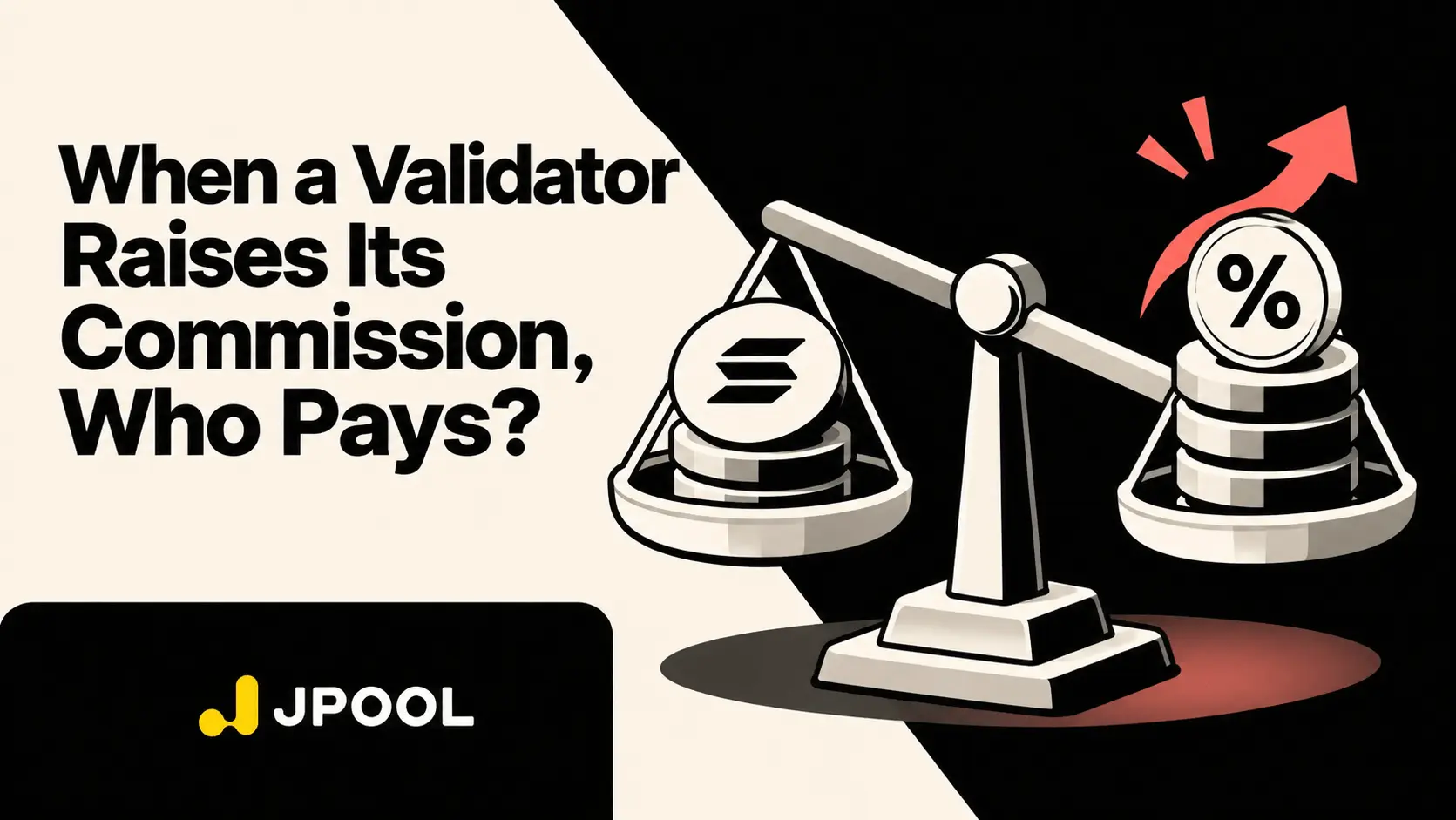
When you stake SOL directly to one validator, its commission is a number you have to watch. Commission is the share of staking rewards the validator keeps before paying out the rest. If the operator moves it from 5% to 10%, your yield drops and nothing warns you. You find out at payout, and your only fix is to unstake and move.
Holding JSOL changes the question. You never picked the validator, so you cannot watch its fee. What stops a validator from raising commission and quietly taking more of your rewards? JPool’s delegation strategy handles it three ways: a hard cap, a bond that pays when a validator crosses the cap, and a lower rank for any validator that charges more.
Table of Contents
You Never Picked That Validator
Holding JSOL means you handed off validator selection, not just the act of staking. JPool spreads stake across its whole validator set and recomputes the targets every epoch. It moves stake toward validators that score well and away from those that do not. No holder approves any single delegation.
So commission is not something you check each month. It is part of how the pool picks and funds validators. If that process is sound, one operator’s fee never reaches your yield in a way you have to act on.
What Commission Actually Costs You
Commission is charged on rewards, not on your principal. A validator earns inflation and MEV rewards on the stake delegated to it, keeps its commission, and passes on the rest. At 5% you receive 95% of what the stake earned. At 10% you receive 90%. The APY you compare between providers already has this taken out, which is why two validators with the same raw performance can post different yields.
A few points of commission is real money on a large position over a year, and a validator can move the number without telling anyone. A holder cannot catch that by watching. The protection has to sit in where the pool is allowed to send stake.
The 10% Commission Cap

The first protection is a hard cap. JPool sets the maximum commission at 10%. A validator above 10% is not eligible for the program, however well it scores on anything else, and it becomes a removal candidate.
The cap is enforced. JPool’s blocklist includes a validator excluded for charging 49% commission. For a holder, this means your stake is never sent to an operator taking more than a tenth of your rewards. The worst eligible case is fixed before any SOL is placed.
Above the Cap, the Bond Pays
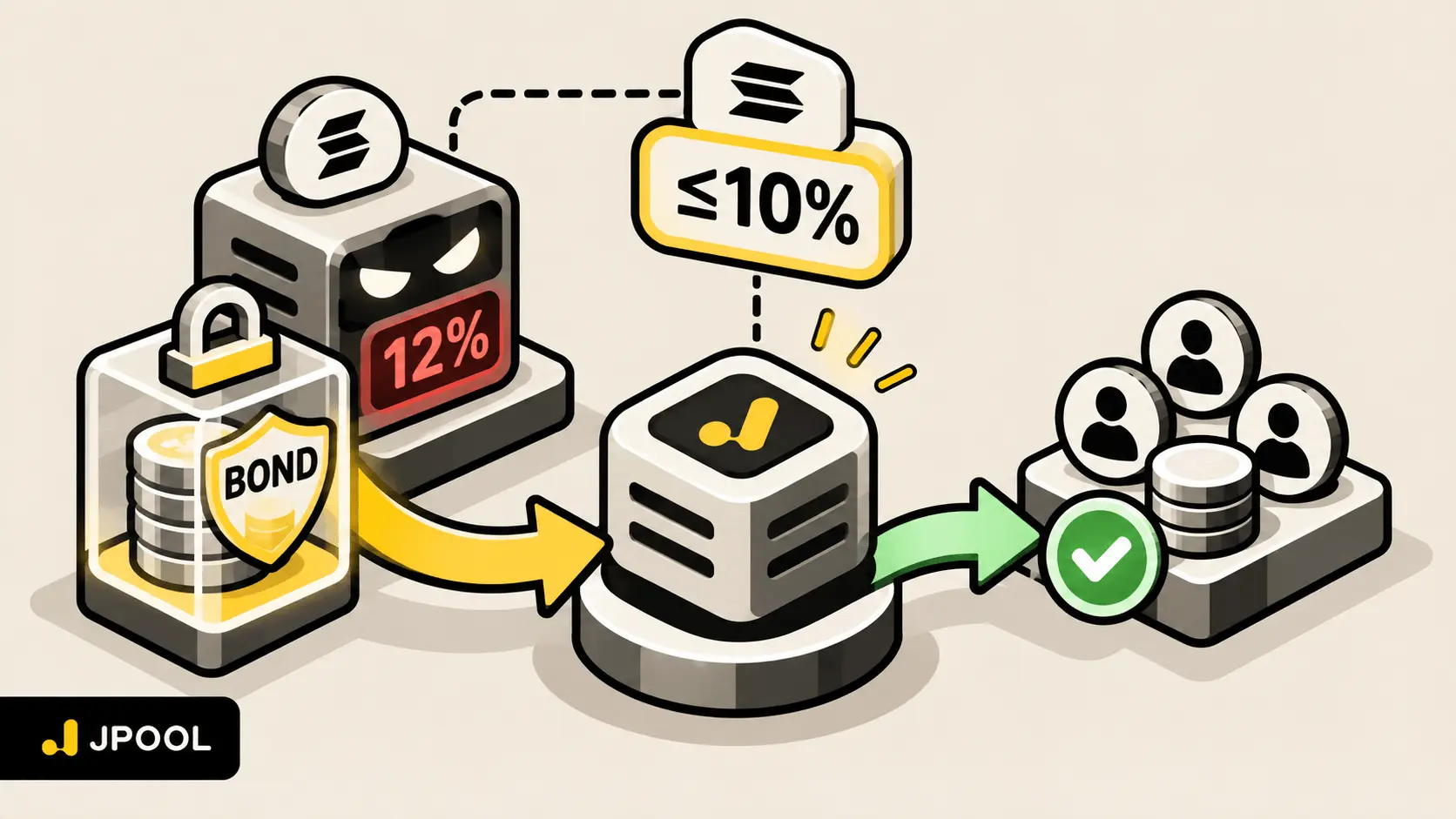
A cap leaves a short gap: a validator can cross 10% before the next rebalance acts on it. The bond system covers that gap. Every validator in the program posts a bond, which is collateral it puts up on its own behavior. When a validator shortchanges its delegators, the strategy charges the bond and pays the stakers from it.
Commission above the cap counts as that kind of shortfall. The validator is billed against its own collateral, so the stakers are repaid and the validator is the one out of pocket. Stake natively with a validator and a higher fee simply takes more of your rewards, with nothing to stop it. Inside JPool, crossing the cap costs the validator instead.
Below the Cap, a Lower Rank
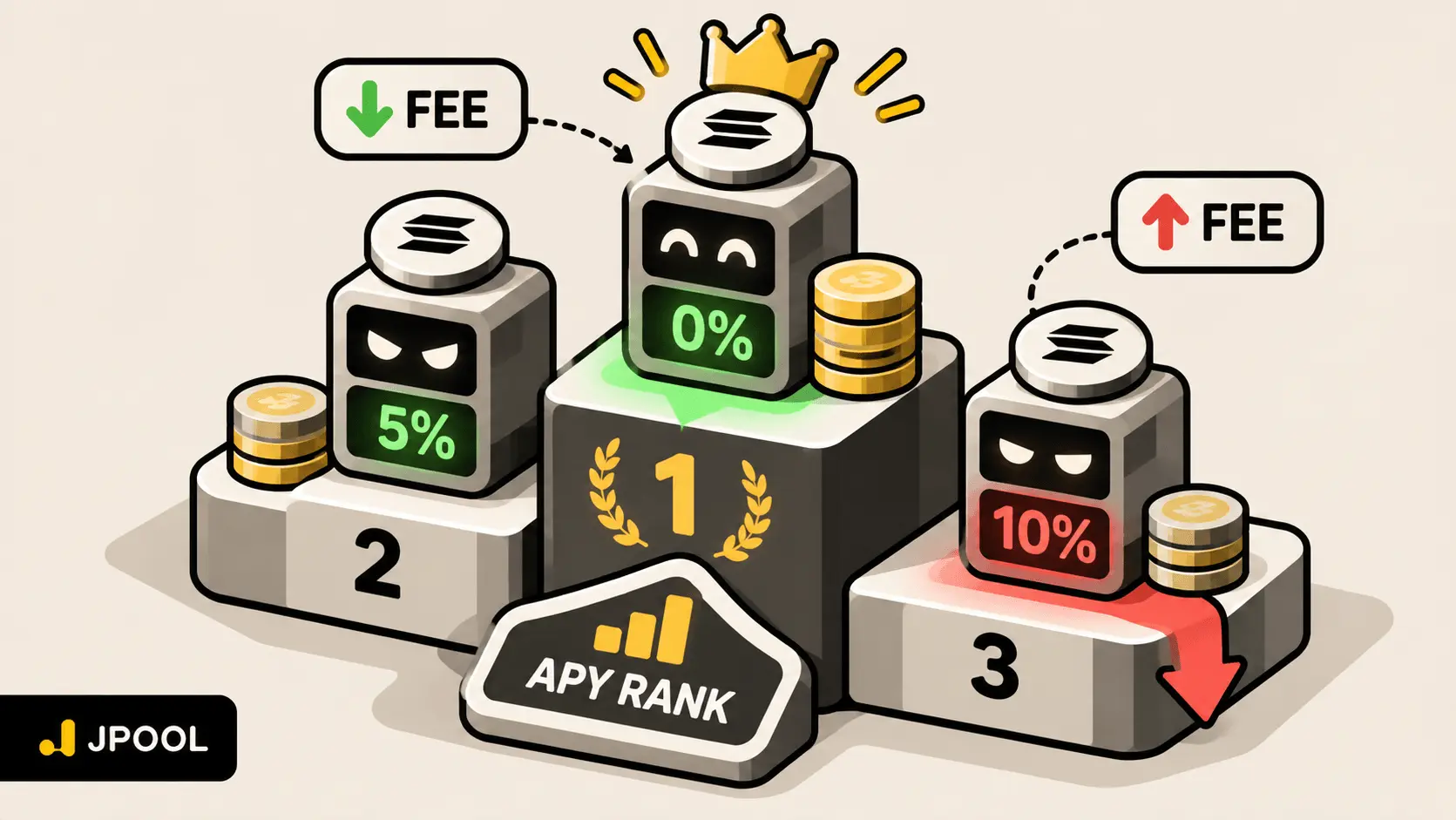
Most commission changes never reach the cap, and those need no flag at all. Commission feeds straight into the net APY the strategy ranks on. A validator that raises its fee lowers its own net yield, which lowers its score. It then earns a smaller share of the performance bucket, the roughly quarter of pool stake handed out by yield rank.
No one has to notice the change for this to work. A higher fee makes the validator a worse place to hold stake, and the next epoch’s allocation reflects that. A validator charging zero commission earns a bonus when the strategy decides where new stake goes.
What This Means If You Hold JSOL
Together, the three layers cap your exposure to any one validator’s commission at 10%, back it with the validator’s own collateral above the cap, and shrink the validator’s stake below it. None of this is a task you run. The pool’s design carries it, which is the reason to hand validator selection to a managed strategy instead of tracking operator fees yourself.
Commission is one input among several. Downtime, MEV capture, and the pool’s own reserve and rebalancing costs move your yield too. But a validator’s fee is no longer something you can miss and pay for. It is the validator’s to justify, and the pool’s to enforce.